Morocco is the home of argan oil, which is exactly why there is so much fake argan oil around. From the souks of Marrakech to roadside stalls near Agadir and endless online shops, not every bottle labelled "pure" is what it claims. Here is how to tell the difference, how argan oil is traditionally used, and how we use it in the hammam ritual.
Where real argan oil comes from
Argan oil is pressed from the kernels of the argan tree (Argania spinosa), which grows in south-west Morocco, mainly around Souss, Agadir, Essaouira and Taroudant. The fruit is dried, the hard nut is cracked, and the small kernels inside are pressed for oil.
Cracking those nuts is slow, skilled work, and much of it is still done by hand by women, many of them working in cooperatives across the region. That is one reason genuine argan oil is never cheap: it takes a lot of fruit and many hours of work to fill a small bottle.
As our grandmothers say: argan is the tree that gives everything, so never rush what it gives you.
Cosmetic vs culinary argan oil: not the same bottle
Before you even think about fakes, know that there are two genuine types of argan oil, made for different purposes.
| Cosmetic argan oil | Culinary argan oil | |
|---|---|---|
| Kernels | Raw, unroasted, cold-pressed | Roasted before pressing |
| Colour | Pale golden yellow | Deeper gold to amber |
| Smell | Light, slightly nutty, fades on skin | Strong toasted, nutty aroma |
| Use | Face, hair, body, nails | Salads, couscous, amlou, bread |
Culinary argan oil is delicious with bread at breakfast or in amlou, but it does not belong on your face. Its toasted smell lingers, and it is made for eating, not for skincare. If a "beauty" oil smells like roasted nuts, it is probably the food version.
How to spot fake argan oil in Morocco
Fake argan oil is usually not a total fake. More often it is real argan cut with cheaper oils, or a cheap oil with a little argan and a lot of marketing. These checks will catch most of them.
1. Smell
Real cosmetic argan oil has a light, nutty, slightly earthy smell that fades within minutes on skin. No smell at all can mean it has been heavily refined or diluted. A strong perfume means fragrance was added, which pure argan oil does not need.
2. Colour and texture
Look for a clear, pale golden colour. Very pale, almost colourless oil, or very dark oil sold for skincare, should make you ask questions. On skin, pure argan oil absorbs fairly quickly and leaves a soft, satin feel rather than a thick, greasy film.
3. Price
If a large bottle costs less than a small bottle elsewhere, something is off. Given how much work goes into each litre, a price that seems too good to be true usually is.
4. The ingredient list
A pure argan oil should list one ingredient only: Argania spinosa kernel oil. If you see sunflower oil, "parfum", mineral oil or a long list of other ingredients, it is a blend, not pure argan oil.
5. Labels and certifications
Organic certifications such as ECOCERT and USDA Organic are independent checks on how an oil is produced. They do not guarantee everything, but they are a strong signal compared with a bottle that has no label, no origin and no batch information.
6. Packaging
Good argan oil is usually sold in dark glass to protect it from light. Clear plastic bottles left out in the sun at a market stall are not a good sign, even if the oil started out genuine.
Tip: Rub a drop between your fingers and smell it after a minute. Real cosmetic argan oil leaves a soft, light, nutty scent. A heavy toasted smell means culinary oil; a perfumed smell means something has been added.
7 traditional ways to use pure argan oil
A small bottle goes a long way. These are the uses Moroccan women have relied on for generations, from the hammam to the bathroom shelf.
- Face oil at night. Press 2 to 3 drops onto clean, slightly damp skin. A splash of water or flower water first helps the oil spread easily.
- Hair ends. Warm one or two drops between your palms and smooth them over dry ends, especially after summer sun and sea water in Agadir or Tangier.
- Pre-wash hair treatment. Massage a little into the lengths an hour before washing for softer, easier-to-detangle hair.
- Cuticles and nails. One drop massaged into each hand at night keeps cuticles soft, particularly after henna or nail polish remover.
- Dry patches. Elbows, heels and knees love a few drops after a shower.
- Gentle makeup remover. Massage over dry skin to melt makeup, then wipe with a warm damp cloth and cleanse as usual.
- After the hammam. Traditionally, argan oil is massaged into damp skin after black soap and kessa, to keep freshly exfoliated skin soft.
How we use argan oil in the hammam ritual
At Arganlys, argan oil is part of the ritual rather than a step on its own. We blend it with nila in the two steps that follow the black soap and kessa, so skin is nourished at the moment it has just been exfoliated.
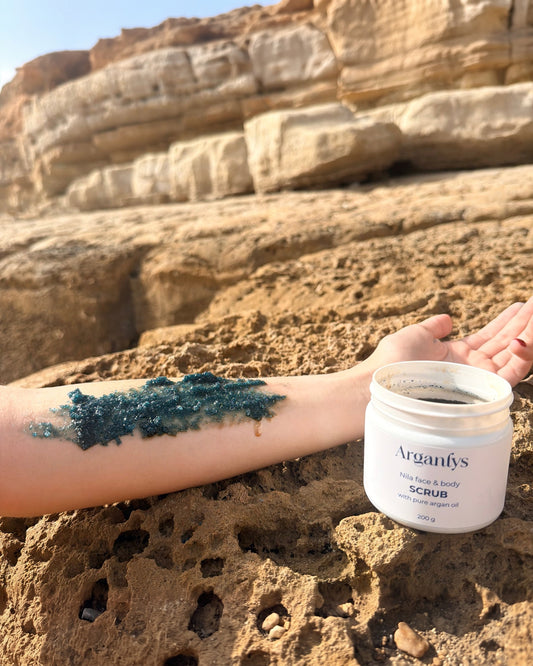
- The scrub. The Nila & Argan Brightening Scrub combines argan oil with sweet almond oil, honey, beeswax and Indigofera extract. Used on rough knees, elbows and legs 2 to 3 times a week, it helps skin look smoother and feel soft rather than tight.
- The mask. The Nila & Argan Brightening Mask brings together nila extract, glycerin, argan oil and honey. Apply a thin layer on clean, exfoliated skin for 7–10 minutes, then remove with a damp cotton pad and rinse.
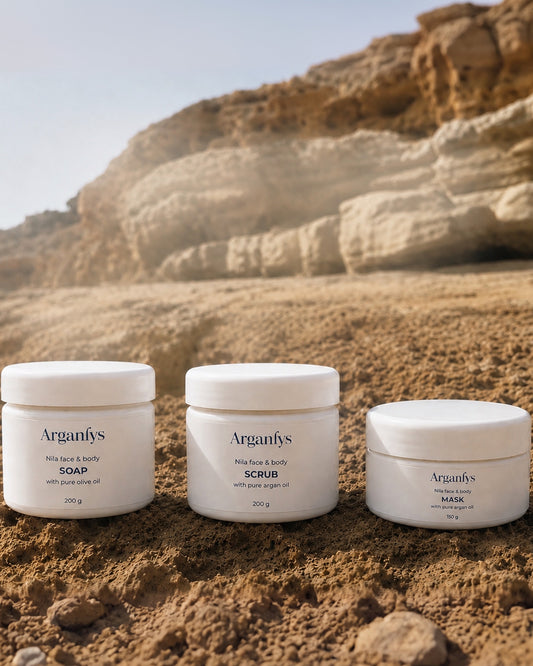
With the Brightening Nila Soap, they make up the Nila & Argan Brightening Bundle: soap, scrub and mask, in the order the hammam uses them. Our guide to a hammam at home shows exactly where each step fits, and What is Nila? Moroccan blue explained covers the other half of the blend.
Patch test first: Argan oil is generally well tolerated, but argan is a tree nut. If you have a nut allergy, very reactive skin or a skin condition, patch test on your inner arm for 24 hours or check with a dermatologist before use.
How to store argan oil so it stays fresh
Like any natural oil, argan oil can oxidise over time. Keep the bottle tightly closed, away from direct sunlight and heat, and avoid leaving it on a sunny windowsill or in a hot car in July. If it ever starts to smell sharp or rancid, it is time to replace it.
Buy small bottles and use them regularly, so you finish each one while it is at its best. The same care applies to products made with argan oil: keep the Nila & Argan Brightening Scrub in the fridge so it keeps its texture.
Shop the ritual
Nila & Argan Brightening Bundle — Nila soap, scrub and mask, with argan oil and honey in the scrub and mask, for a complete hammam ritual at home.
Frequently asked questions
How can I tell if argan oil is real in Morocco?
Check the ingredient list for a single ingredient, Argania spinosa kernel oil, and look for a pale golden colour, a light nutty smell and dark glass packaging. Be wary of very cheap prices and unlabelled bottles. Certifications like ECOCERT and USDA Organic add extra reassurance.
Can I use culinary argan oil on my face?
It is better not to. Culinary argan oil is made from roasted kernels, so it has a strong toasted smell and is meant for food. For skin and hair, choose cold-pressed cosmetic argan oil.
Is argan oil good for oily or acne-prone skin?
Many people with oily skin use a few drops of argan oil without problems, but every skin is different. Start with 1 or 2 drops at night, patch test first, and see a dermatologist for persistent or cystic acne.
Which Arganlys products contain argan oil?
The Nila & Argan Brightening Scrub and the Nila & Argan Brightening Mask both contain argan oil, alongside honey and nila. As with any new product, patch test first, especially if you have a nut allergy.
Does pure argan oil smell?
Yes, slightly. Pure cosmetic argan oil has a light, nutty, earthy scent that fades on the skin. A strong toasted smell suggests culinary oil, and a perfumed smell suggests added fragrance.