For many Moroccan women, the weekly hammam is not a luxury; it is simply how skin is cared for. But between work, family and life abroad, getting to the neighbourhood hammam is not always possible. The good news: with a kessa glove, some steam and the right order of steps, your own bathroom can do the job.
What a kessa glove is and why it works
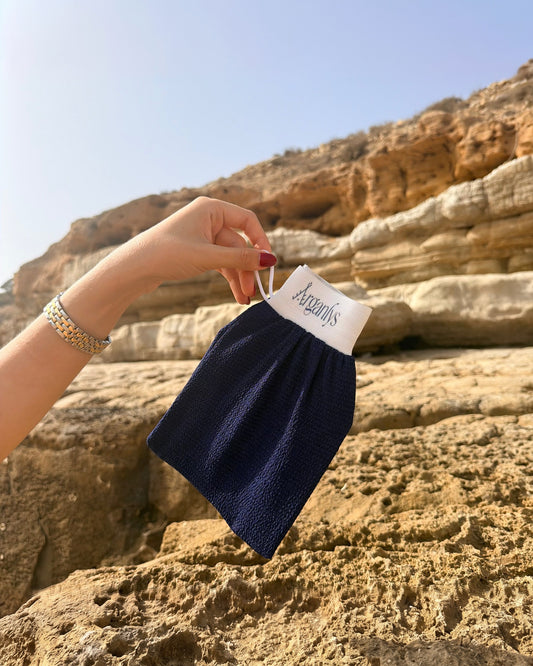
A kessa (الكيسة) is the rough exfoliating glove used in every Moroccan hammam. It is woven from coarse fibres that grip the outer layer of dead skin once it has been softened by heat and black soap. With firm strokes, that layer comes away in the famous grey rolls the kessala at the hammam proudly shows you.
Unlike a scrub with grains, the kessa does not need any product of its own. It works mechanically, which is why preparation matters so much. On dry, cold skin it simply scratches; on steamed, soaped skin it glides and lifts.
Our Premium Kessa Glove is made from natural fibres and is designed for the whole body: legs, arms, back, and the areas where dead skin builds up and can create a dull look or a "strawberry skin" texture.
What you need for a hammam at home
- A bathroom you can close to hold steam (shower or bath both work)
- A small stool or a towel to sit on, if you like to take your time the traditional way
- Brightening Nila Soap or plain savon beldi
- A kessa glove
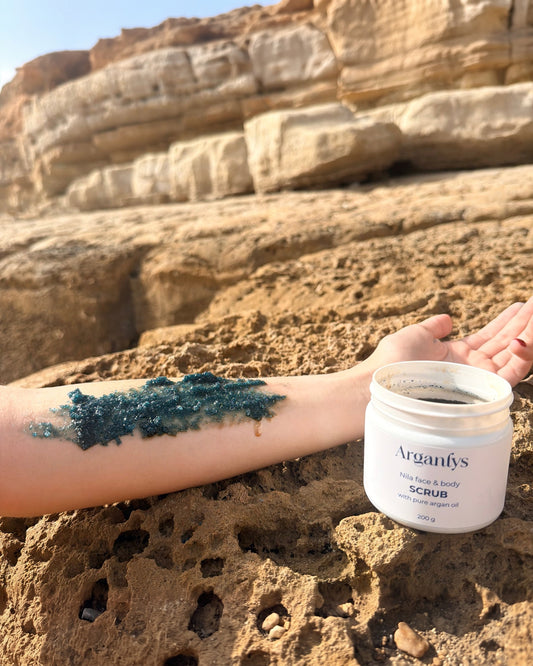
- Optional: Nila & Argan Brightening Scrub for rough areas
- Nila & Argan Brightening Mask, made with argan oil and honey
- A light moisturiser for the face and body
- A large glass of water or a pot of mint tea for afterwards
Plan for 45 minutes to an hour. Rushing is the most common reason a home hammam disappoints.
The Moroccan hammam ritual, step by step
1. Steam: 10-15 minutes
Close the door and window, and run the shower as hot as is comfortable. Let the room fill with steam. If you have a bath, soak in warm water instead. You want the skin warm, soft and slightly wrinkled at the fingertips.
2. Black soap: 3-5 minutes
Turn the water off or step out of the stream. Spread black soap over damp skin, avoiding the eyes, and leave it on for 3-5 minutes while you stay in the steam. Rinse thoroughly. Our savon beldi guide covers this step in detail.
3. Kessa: about 10 minutes
Slightly wet the glove and pull it tight over your hand. Work section by section:
- Start with the legs, using long, firm strokes in one direction.
- Move to the arms, then the stomach and sides with lighter pressure.
- For the back, ask someone you trust, or use the glove over the shoulder as best you can.
- Go gently on the inner thighs, underarms and chest, where skin is thinner.
Rinse the glove often. When the grey rolls stop appearing in an area, move on. More pressure does not mean better results.
4. Scrub: optional, 2-3 minutes
For rough knees, elbows, strawberry legs or old acne marks on the body, massage a little nila scrub into those areas after the kessa, then rinse. Skip this on any area that already feels sensitive.
5. Mask: 7–10 minutes
Apply the nila mask on clean, exfoliated skin, on the face or on areas you are working on for a more even-looking tone. Relax for 7–10 minutes, then remove with a damp cotton pad and rinse.
6. Moisturise and rest
Pat skin until just damp and smooth a light moisturiser all over the body and face. Drink your water or tea, and rest before getting dressed.
Tip: Keep the nila scrub in the fridge so it keeps its texture better. A splash of cool water on the face after a hot bathroom feels wonderful.
How often to kessa (and when to skip it)
At the traditional hammam, most women go once a week, and that rhythm works at home too. For sensitive or dry skin, every 10-14 days may be enough. A light scrub on rough areas can be added 2-3 times a week, but the full kessa should stay weekly.
Skip the kessa on sunburn, freshly shaved or waxed skin, open cuts, active rashes or inflamed breakouts. Wait at least 24-48 hours after shaving or waxing.
Be gentle with your skin: Patch test any new soap, scrub or mask first. If you have eczema, psoriasis, cystic acne, broken skin or are pregnant, ask a dermatologist before starting a kessa routine. Redness that lasts more than a few hours means the pressure was too strong.
As our grandmothers say at the hammam, you do not go to the hammam to suffer; you go to come out lighter, softer and at peace.
Common kessa mistakes to avoid
- Kessa on dry skin. Without steam and soap, you scratch rather than exfoliate.
- Scrubbing too hard. Glowing skin should feel soft, not raw or stinging.
- Going over the same spot again and again. Once an area stops shedding, it is done.
- Skipping the oil. Freshly exfoliated skin loses moisture fast, especially in dry summer heat.
- Forgetting sunscreen the next day. Exfoliated skin is more exposed to Moroccan sun. Apply SPF daily, especially if you are working on dark marks.
- Using a kessa on the face like on the body. If at all, use very light pressure and only occasionally.
If you are using the hammam ritual to work on dark underarms, knees or a bikini line, read our gentle routine for dark areas. And to learn more about the blue ingredient in the soap, scrub and mask, see what nila is.
How to care for your kessa glove
- Rinse it well under warm water after each use until no soap or skin remains.
- Wash it with a little soap once a week and rinse thoroughly.
- Dry it completely in the open air, ideally in the sun, never rolled up wet in a bag.
- Keep it personal. A kessa is like a toothbrush; don't share it.
- Replace it when the fibres become soft and smooth and stop gripping, or if it smells musty.
Shop the ritual
No Acne Bundle — Nila soap and the kessa glove together, the two essentials for a real hammam at home.
Frequently asked questions
How do I use a kessa glove for the first time?
Steam your skin for 10-15 minutes, apply black soap for 3-5 minutes, rinse, then rub the slightly wet glove in long, firm strokes, starting with the legs. Rinse the glove often and stop on any area that turns red or stings. Finish with the Nila & Argan Brightening Mask or a light moisturiser.
Can I use a kessa glove without black soap?
You can after a long hot bath, but it works much better with savon beldi. The soap softens and loosens dead skin so the kessa lifts it away easily instead of scratching. Black soap and kessa are traditionally always used together.
How often should I do a hammam at home?
Once a week suits most skin types, which is the traditional Moroccan rhythm. Sensitive or very dry skin may prefer every 10-14 days. Don't kessa more often than weekly, even if you want faster results.
Can I use a kessa glove on my face?
The face is more delicate than the body, so most people skip the kessa there or use it with very light pressure, occasionally. A mask like the Nila & Argan Brightening Mask followed by a light moisturiser is a gentler facial step. If you have acne or sensitive skin, ask a dermatologist first.