Every Moroccan hammam starts the same way: a scoop of dark, glossy paste spread over warm skin. That is savon beldi, Moroccan black soap, and it is the reason the kessa afterwards works so well. Used the right way, it turns an ordinary shower into a real hammam ritual.
What savon beldi is (and why it looks like a paste)
Savon beldi, صابون بلدي, means "traditional soap" or "soap of the country". It is made by saponifying olive oil, and often olive paste, with potassium hydroxide. That potassium base is what gives it its soft, gel-like texture instead of a hard bar.
Its colour ranges from deep brown to almost black, depending on the olives and how long the soap has been cooked. In the souks it is often sold by weight from big tubs, sometimes perfumed with eucalyptus. In French you will see it as savon noir marocain.
Don't confuse it with West African black soap made from plantain ash and shea butter. The Moroccan version is olive-based and made specifically to prepare the skin for the kessa.
How black soap differs from your everyday shower gel
Savon beldi is not designed to foam and rinse off in 30 seconds. It is designed to sit on the skin, soften it and loosen the outer layer of dead cells so the kessa can lift them away.
| Savon beldi | Regular shower gel | |
|---|---|---|
| Texture | Thick, soft paste | Liquid gel |
| Lather | Little or none | Lots of foam |
| Contact time | Left on 3-5 minutes | Rinsed off immediately |
| Main purpose | Softening skin before the kessa | Everyday cleansing |
| Best used | On warm, damp, steamed skin | Any time |
Like all true soap, savon beldi is alkaline. That is part of why it cleanses so thoroughly, and also why the oil step at the end of the ritual is not optional.
How to use Moroccan black soap, step by step
1. Warm up the skin
Take a hot shower or run a hot bath for 5-10 minutes with the door closed so the bathroom fills with steam. Skin that is warm and soft responds much better than dry, cold skin.
2. Apply on damp skin
Take a small amount, about a teaspoon for each arm or leg, and spread it over damp (not dripping) skin. Massage gently in circles. Avoid the eyes and any irritated area.
3. Leave it 3-5 minutes
This is the step most people skip. Let the soap rest while you stay in the steam. Splash a little warm water on it if it starts drying out.
4. Rinse thoroughly
Rinse well with warm water until the skin no longer feels slippery.
5. Kessa
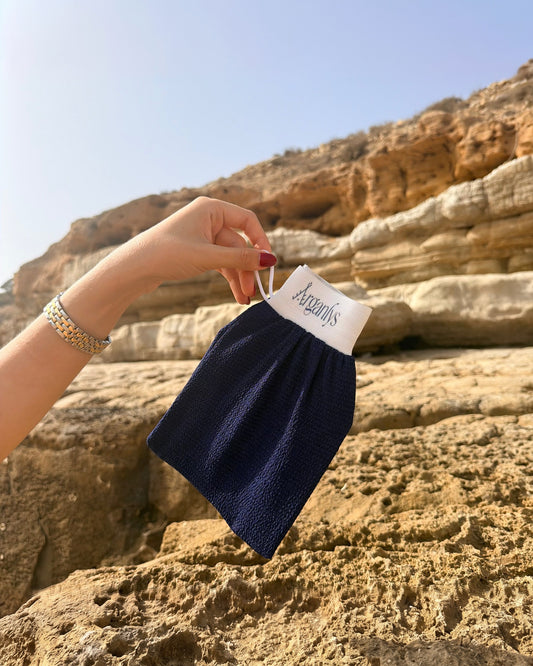
Now take your Premium Kessa Glove and rub in firm, long strokes. You will see grey rolls of dead skin come away. We explain the technique in detail in our kessa and hammam-at-home guide.
6. Nourish
Rinse again and pat dry. For a calm finish, apply a thin layer of the Nila & Argan Brightening Mask, made with argan oil and honey, for 7–10 minutes, then rinse and smooth a light moisturiser into slightly damp skin. This restores comfort after the soap and the kessa.
Tip: Close the jar tightly after every use and keep water out of it. Savon beldi is a natural paste, and a wet spoon or splashes from the shower can change its texture over time.
Nila soap vs plain savon beldi
Plain savon beldi is a cleansing and softening step. Our Brightening Nila Soap keeps that same olive-oil black soap base and adds authentic Indigofera extract, the plant behind Moroccan nila. Its ingredient list is short: sodium olivate (the black soap), olive oil, Indigofera extract, water and potassium hydroxide.
The difference is in the goal. If you only want a good pre-kessa cleanse, plain beldi does the job. If you are working on dullness, rough texture or an uneven-looking tone on the body, the nila version lets you add a traditional brightening ingredient without an extra step. Curious about nila itself? Read what nila is and how to spot a fake.
Either way, no soap will change your natural skin colour. Your skin does not need to be bleached; it needs a consistent routine that cleanses, exfoliates and nourishes it gently.
Face vs body: using black soap safely
On the body
The body is where savon beldi shines: back, legs, arms, elbows and knees. Once or twice a week is enough for most skin types. For back and chest breakouts or strawberry legs, the soap plus kessa combination is the base of our No Acne Bundle.
On the face
Facial skin is thinner and more reactive. If you use black soap on the face, use a very small amount, leave it 1-2 minutes maximum, rinse well and skip the kessa or use it with very light pressure. Follow with cool water and a light moisturiser.
Patch test first: Try the soap on a small area inside your arm before your first full ritual. If you have eczema, rosacea, cystic acne, broken skin or are pregnant, check with a dermatologist before using black soap and a kessa on the face.
Common black soap mistakes to avoid
- Applying it to dry skin. Without steam and water, the soap cannot soften anything and may feel tight.
- Rinsing it off straight away. The 3-5 minutes of contact is what makes the kessa effective.
- Using it every day. Daily black soap plus kessa is too much for most skin. Weekly is the hammam rhythm for a reason.
- Kessa-ing too hard. Redness and stinging mean you went too far. Glowing skin should feel soft, not raw.
- Skipping the oil. Freshly exfoliated skin needs nourishment, especially in dry summer heat.
- Forgetting SPF. Exfoliated skin is more exposed to the Moroccan sun. Use daily sunscreen on any area you are working on for dark marks.
As our grandmothers say at the hammam, the soap opens the door and the kessa does the work, but it is the patience in between that makes the skin shine.
Shop the ritual
Brightening Nila Soap — olive-oil savon beldi with authentic nila, the first step of every Moroccan hammam.
Frequently asked questions
How often should I use Moroccan black soap?
For most people, once or twice a week on the body is ideal, followed by a kessa and argan oil. Using it daily with a kessa can leave skin dry or irritated. Very oily or acne-prone body skin may tolerate twice a week; sensitive skin often prefers once.
Can I use savon beldi without a kessa glove?
Yes, it still cleanses and softens the skin. But the kessa is what removes the dead skin the soap has loosened, so you get much more from the ritual with both. A kessa glove is the traditional partner to savon beldi.
Does black soap remove dark spots?
Black soap alone does not remove dark spots. As part of a weekly routine with kessa, a gentle scrub and daily sunscreen, it helps skin look smoother and more even over time. For melasma or persistent pigmentation, see a dermatologist.
Is savon noir marocain good for the face?
It can be, in small amounts and for short contact times of 1-2 minutes, rinsed well and followed by a light moisturiser. Always patch test first. If you have sensitive, eczema-prone or cystic acne skin, ask a dermatologist before using it on your face.